

by Ma. Bea Patricia P. Santiano / JD1

Photo: unsplash/purzlbaum
I. Introduction
Food waste is an expanding global problem that people often overlook because of the seemingly abundant sources of food in the world. As something that is part of our everyday lives—that just like air, keeps us living—it probably does not cross our minds that so much of it actually goes to waste.
Seven years ago, one country took a step towards alleviating this problem with a pioneering law on food waste prevention. Ironically, this country is known as a producer of some things often considered luxurious: haute couture, perfume, and jewelry, to name a few. It is the home of several world-renowned spots, including the Eiffel Tower, the Louvre Museum, and the Palace of Versailles. It is also famous for dishes such as ratatouille, escargot, and foie gras. It is none other than the land of wine and cheese, France.
In February 2016, France implemented Loi Garot, a food waste prevention law that banned supermarkets from throwing away unsold food items and obliged them to redistribute and donate instead. “This law constituted the starting point of the fight against food waste [by] banning its destruction and facilitating donation. Since the adoption, its scope has been extended further, as defined through new decrees and laws.” (“France’s Law for Fighting Food Waste: Food Waste Prevention Legislation”)
In the Philippines, there are no laws yet that direct food suppliers or distributors to do the same—and this is precisely why this research topic was chosen. Although there are no laws in the country exactly like the ones implemented in France, there is one that merely encourages the donation of food for charitable purposes, which is Republic Act No. 9803, also known as the “Food Donation Act of 2009.”
Section 2 of the said law states, “It is the policy of the State to alleviate national poverty and reduce food wastage. As such, the State shall implement measures to encourage the donation of apparently wholesome food for charitable purposes.” (“Republic Act No. 9803 | GOVPH”)
Aside from this, there are several food waste prevention-related bills filed by the Senate in recent years that, unfortunately, have not been signed into law. These include Senate Bill No. 3225 of the 16th Congress of the Republic, or “Banning Supermarkets, Food Establishments from Throwing Away and Spoiling Unsold Foods,” introduced by Senator Francis “Chiz” G. Escudero in 2016; Senate Bill No. 357 of the 17th Congress of the Republic, or the “Zero Food Waste Act,” introduced by Senator Paolo Benigno “Bam” Aquino IV in 2016; Senate Bill No. 766 of the 17th Congress of the Republic, or “Banning Supermarkets, Food Establishments from Throwing Away and Spoiling Unsold Food,” also introduced by Senator Francis “Chiz” G. Escudero in 2016; and Senate Bill No. 984 of the 17th Congress of the Republic, or the “Zero Food Waste Act,” introduced by Senator Francis “Kiko” N. Pangilinan in 2016.
Three more food waste prevention bills were filed during the 18th Congress of the Philippines, which include the following: Senate Bill No. 423, or the “Food Waste Reduction Act,” introduced by Senator Francis “Kiko” N. Pangilinan in 2019; Senate Bill No. 523 or the “Zero Food Waste Act,” introduced by Senator Juan Miguel “Migz” F. Zubiri in 2019; and Senate Bill No. 1364 or the “Food Waste Reduction Act,” introduced by Senator Emmanuel “Manny” D. Pacquiao in 2019.
The House of Representatives has also filed several food waste prevention bills, eleven of which were filed during the 18th Congress of the Philippines. These include House Bill No. 2031 or “An Act Providing for a System of Redistributing And Recycling Food Waste to Promote Food Security,” authored by “Kuya” Jose Antonio R. Sy-Alvarado in 2019; House Bill No. 3370 or “An Act Reducing Food Waste through Food Donations and Food Waste Recycling,” authored by Sharon S. Garin in 2019; and House Bill No. 7956 or “An Act Reducing Wastage by Donating and Recycling Excess Edible Food,” filed in 2020.
Despite the lack of similar legislation as Loi Garot, the perseverance of Filipino lawmakers in filing food waste prevention bills gives hope that it won’t be long before the Philippines also implements one of its own.
II. Objectives of the Study
This study aims to reach three main objectives: to study, compare, and recommend.
To elaborate, the first objective is to study Loi Garot, the pioneering food waste prevention law implemented in France in 2016.
The second objective is to compare the steps taken by the governments of the Philippines and France in solving the growing problem of food waste.
Finally, the third objective is to recommend what can be done regarding food waste in the Philippines, taking after the initiative of France.
III. Methodology
In conducting this research, various sources of information were considered, including laws from both the Philippines and France. Since this is a comparative study, legal sources and articles that tackle the topic of food waste prevention in both countries were read, distinguished, and connected.
As previously stated, this comparative research on food waste management laws in the Philippines and France has the following objectives: first is to study the pioneering food waste prevention law implemented in France in 2016; second is to compare the steps taken by the Philippines and France in solving the growing global problem of food waste; third is to recommend what can be done regarding food waste in the Philippines, taking after what has already been implemented of France.
To achieve these goals, the existing food waste prevention law of France, known as Loi Garot, which “introduced a new regulation for businesses selling food: [the] obligation to redistribute unsold goods,” will be studied. Other food waste-related laws will also be considered, including Loi Aillagon, which “introduced tax rebate to businesses for in-kind [donations], including food donations,” and Loi Egalim, which is “not specific to food donation and covers a wide scope of activities in the food industry.” (Cesaro)
An existing food waste-related law in the Philippines will also be studied, specifically Republic Act No. 9803 or “An Act to Encourage the Donation of Food for Charitable Purposes,” otherwise known as the Food Donation Act of 2009. Furthermore, bills previously filed by Congress, although not signed into law, will also be discussed.
IV. Discussion
A. Defining food waste
In order to study and compare food waste prevention-related laws, the definition of “food waste” and the importance of why it must be addressed must be established first.
According to the “Food wastage footprint: Impacts on natural resources – Summary report” by the Food and Agriculture Organization of the United Nations (FAO):
“Food waste refers to food appropriate for human consumption being discarded, whether or not after it is kept beyond its expiry date or left to spoil. Often this is because food has spoiled but it can be for other reasons such as oversupply due to markets, or individual consumer shopping/eating habits.”
FAO
Meanwhile, according to a four-year project with the goal of reducing food waste in Europe called Food Use for Social Innovation by Optimising Waste Prevention Strategies (FUSIONS):
“Food waste is any food, and inedible parts of food, removed from the food supply chain to be recovered or disposed [of] (including composted, crops [plowed] in/not harvested, anaerobic digestion, bio-energy production, co-generation, incineration, disposal to sewer, landfill or discarded to [the] sea.)” (Gheoldus)
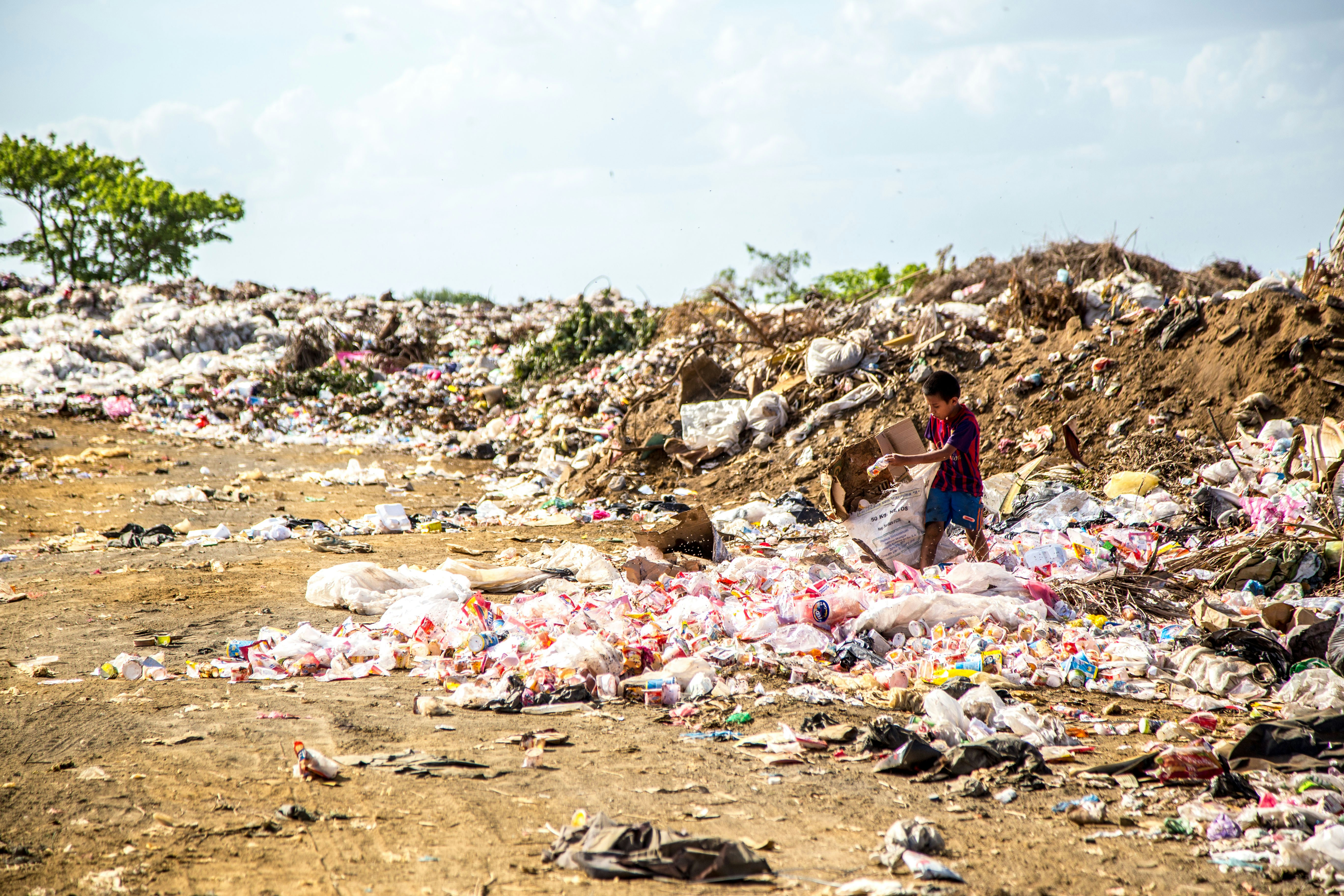
Photo: unsplash/hermez777
Furthermore, FUSIONS emphasized that compared to other sources, its definition of food waste encompasses more things. “Drink and liquid waste, fish discarded to sea, and waste of any materials that are ready for harvest, but which are not harvested, are included in FUSIONS’s definition of food waste, making its perimeter wider and broader than many other existing definitions. FUSIONS also considers inedible parts of food (e.g. skin, bones…) as food waste in order to support the development of [resource-efficient] and sustainable food systems in the EU.” (Gheoldus)
Acknowledging that food waste has been a growing concern, especially in the past decade, the United Nations established the “International Day of Awareness of Food Loss and Waste,” which is celebrated on the 29th day of September every year. “The International Day of Awareness of Food Loss and Waste is an opportunity to call to action both the public (national or local authorities) and the private sector (businesses and individuals), to [prioritize] actions and move ahead with innovation to reduce food loss and waste towards restoring and building back better and resilient-ready, food systems.” (United Nations)
The international organization also highlighted that the majority of the food waste produced around the world comes from the food production level. “Globally, around 14 percent of food produced is lost between harvest and retail, while an estimated 17 percent of total global food production is wasted (11 percent in households, 5 percent in the food service and 2 percent in retail).”
In the “International Day of Awareness on Food Loss and Waste Reduction” website by the United Nations, food waste is said to happen in two places: in retail stores and at home. At the retail level, it often happens because of three major reasons: shelf life, aesthetic standards, and inconsistencies or unpredictability in what consumers are looking for. “[It happens] in the shop: the causes of food waste at the retail level are linked to limited shelf life, the need for food products to meet aesthetic standards in terms of [color], shape, and size, and variability in demand.”
Meanwhile, food waste generated at home is also caused by three major reasons: food decisions, (both in buying and preparing), hoarding, and storage. “[It also happens] in the home: consumer waste is often caused by poor purchase and meal planning, excess buying (influenced by over-large portioning and package sizes), confusion over labels (best before and use by), and poor in-home storing.” (United Nations)
“Food waste” is not to be confused with “food loss,” which is considered to take place in three places different from that of food waste. Defined as “a decrease in mass (dry matter) or nutritional value (quality) of food that was originally intended for human consumption,” it occurs when the food products are at the farm, in storage, or transit.
“These losses are mainly caused by inefficiencies in the food supply chains, such as poor infrastructure and logistics, lack of technology, insufficient skills, knowledge, and management capacity of supply chain actors, and lack of access to markets. In addition, natural disasters play a role.”
United Nations
The first place where food loss occurs is at the farm, when the following factors are present: “inadequate harvesting time, climatic conditions, practices applied at harvest and handling, and challenges in marketing produce.” Furthermore, it also happens when food is in storage, when the following conditions are present: “inadequate storage [and] decisions made at earlier stages of the supply chain that cause products to have a shorter shelf life.” Finally, it also occurs while food products are in transit. “Good infrastructure and efficient trade logistics are key to preventing food loss. Processing and packaging play a role in preserving foods, and losses are often caused by inadequate facilities, technical malfunction, or human error.” (United Nations)
B. Relevance of food waste prevention
The problem of food waste is multidisciplinary—it touches on various issues that the United Nations aims to address, including poverty, hunger, and climate change. “Reducing food losses and waste is essential in a world where the number of people affected by hunger has been slowly on the rise since 2014, and tons and tons of edible food are lost and/or wasted every day.” (United Nations)
“The International Day of Awareness of Food Loss and Waste,” first celebrated in 2019, aims to highlight the relevance of solving the problem of food waste and food loss around the world. As stated on its website:
“We need to be aware [of] the importance of the food loss and waste issue, and promoting global efforts towards resolving it. That is why, in 2019, the 74th United Nations General Assembly designated 29 September as the International Day of Awareness of Food Loss and Waste (resolution A/RES/74/209), recognizing the fundamental role that sustainable food production plays in promoting food security and nutrition.”
Some of the effects of food waste on the environment include the production of greenhouse gas emissions and the use of land for agricultural purposes, which could otherwise be used for something else. “Cutting food loss and waste reduces poverty and hunger and fights climate change. In terms of climate change, the damage will be reduced taking into account that nowadays, food loss and waste [are] responsible for about 7% of global greenhouse gas (GHG) emissions and nearly 30% of the world’s agricultural land is currently occupied to produce food that is ultimately never consumed, just to name a few examples.” (United Nations)
Aside from this, many resources are needed and used in order to produce food products, such as soil, water, and labor, to name a few. Considering the arduous process it takes to produce the food we get on our plates every day, its wastage means that the resources utilized in its production will also amount to nothing.
“Food loss and waste undermine the sustainability of our food systems. When food is lost or wasted, all the resources that were used to produce this food – including water, land, energy, [labor], and capital – go to waste. In addition, the disposal of food loss and waste in landfills, leads to greenhouse gas emissions, contributing to climate change. Food loss and waste can also negatively impact food security and food availability, and contribute to increasing the cost of food.”
United Nations
Meanwhile, an article entitled “Fighting food wastage – introduction to the French law,” published by Zero Waste City, described the problem of food waste as an economical, environmental, and moral one. “Food waste comes from multiple sources such as food scraps (from kitchens), expired food, [and] unsold/unused food. The latter represents a real challenge on an economical, environmental, and moral ground.” (Cesaro)
The three types of challenges mentioned were expounded further:
“[The problem is] economical because it is a direct loss for businesses or individuals. [It is environmental] because it does contribute to the depletion [of resources. It is moral] because food insecurity is a reality in every country, and it is hardly acceptable to destroy consumable food when only a few kilometers away families struggle to meet basic needs. Several countries have implemented incentives for businesses to donate food such as tax rebates. One of them, France, went a step ahead: forbidding companies from throwing away consumable food.” (Cesaro)
Recognizing that food waste comes from many different sources—from smaller ones such as individuals and households to bigger sources such as restaurants and other business establishments—is important for researchers and legislators alike. For researchers, this would help identify what sources to consider in order to give their work more focus and direction. Meanwhile, for legislators, this would aid in the creation of more specific laws with objectives that could focus on what must be urgently attended to.
C. Food waste prevention in France
In Europe, most of the food waste comes from smaller sources, specifically from individual consumers. “Although France wastes less food than the EU average, food waste happens in a more balanced way across the full food supply chain. In the EU, 53% of food waste happens at the consumer level, while in France it only accounts for 33%, which includes collective catering and restaurants.” (“France’s Law for Fighting Food Waste: Food Waste Prevention Legislation”)
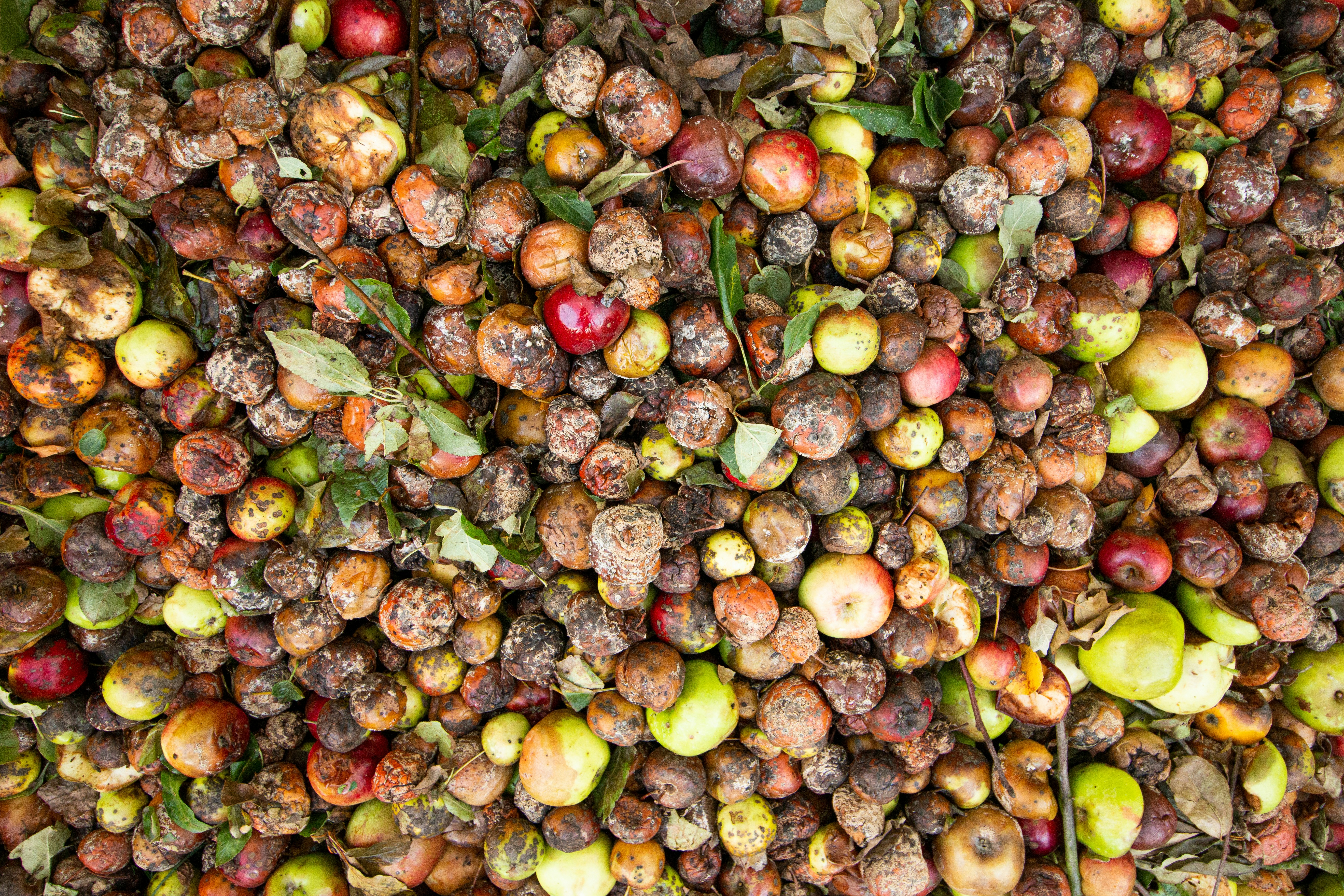
Photo: unsplash/jccards
Loi Garot, the food waste prevention law passed by France in 2016, focuses on the food waste generated at the retail level, which comprises 14% of the country’s total amount of food waste. “Another 14% [of food waste in France] happens at the retail level while the rest is happening during the production and process steps.” (“France’s Law for Fighting Food Waste: Food Waste Prevention Legislation”)
This law tackles not only the problem of food waste but of poverty as well since it obliges supermarkets to donate to charity their unsold food items, which would have otherwise been sent to trash bins, and later on, to landfills. They are put to good use before they even become considered unfit for consumption or turn into “food waste.”
“The original law adopted in 2016 aims to avoid food waste through [incentivizing] food donation and forbidding the destruction of unsold food products. It focused on the retail sector first to limit food waste in the sector as a whole, but also established a frame for food waste prevention through the adoption of a food waste hierarchy. Then, several other provisions were adopted through decrees and laws strengthening and widening the scope of the 2016 law to catering and food distribution but also through general objectives to reduce food waste by 50% by 2025.” (“France’s Law for Fighting Food Waste: Food Waste Prevention Legislation”)
The full title of Loi Garot is “LOI n° 2016-138 du 11 février 2016 relative à la lutte contre le gaspillage alimentaire” in French, or “LAW n° 2016-138 of February 11, 2016 relating to the fight against food waste” in English.
Loi Garot states the priority of the measures to be taken in order to solve the problem of food waste. First, of course, is prevention; second is donation or transformation; third is recovery for animal feed; and fourth is utilization for agriculture and energy. The English translation of Art. L. 541-15-4 of the law states:
“Art. L. 541-15-4. – The fight against food waste involves empowering and mobilizing producers, processors, and distributors of foodstuffs, consumers, and associations. Actions to combat food waste are implemented in the following order of priority:
- The prevention of food waste;
- The use of unsold items suitable for human consumption, by donation or transformation;
- Recovery intended for animal feed;
- Use for compost purposes for agriculture or energy recovery, in particular by [mechanization.]
The fight against food waste includes awareness-raising and training for all players, the mobilization of players at the local level, and regular communication with consumers, in particular within the framework of local waste prevention programs.”
Meanwhile, Art. L. 541-15-5.-III of Loi Garot states that retail stores or supermarkets have the obligation to partner with charitable organizations that can benefit from their unsold food products that are still good for consumption. It states:
“Art. L. 541-15-5.-III.-The donation of foodstuffs by a food retail trade whose sales area is greater than the threshold mentioned in the first paragraph of Article 3 of Law No. 72-657 of July 13, 1972, instituting measures in favor of certain categories of elderly shopkeepers and craftsmen to a charitable association authorized pursuant to article L. 230-6 of the rural and maritime fishing code is the subject of an agreement which specifies the terms and conditions.”
For reference, the first paragraph of Article 3 of Law No. 72-657 mentioned in the previously quoted law states that: “A tax on commercial areas is instituted based on the sales area of retail stores, when it exceeds 400 square meters of establishments open from 1 January 1960, regardless of the legal form of the business.” Therefore, retail stores or supermarkets with an area of 400 square meters or more are the ones with the obligation to establish a relationship with their chosen charitable organization.
These retail stores and supermarkets obliged to donate are also forbidden from intentionally or blatantly destroying their unsold food items. The English translation of Art. L. 541-15-5.-I of Loi Garot states:
“Art. L. 541-15-5.-I.- Distributors in the food sector [shall] ensure the marketing of their foodstuffs or their promotion in accordance with the hierarchy established in Article L. 541-15-4. Without prejudice to the rules relating to food safety, they may not deliberately make their unsold food still edible unfit for consumption or for any other form of recovery provided for in the same article L. 541-15-4.”
However, it is recognized that this law has certain limitations, which include the following: “The obligation to donate unsold food products does not specify the quantity hence 1% can be sufficient,” and it “only targets a part of the supply chain and misses pre-retail steps.” (“France’s Law for Fighting Food Waste: Food Waste Prevention Legislation”)
Loi Garot is preceded and followed by other food regulation-related laws, although their objectives are more focused on food donation instead of food waste reduction.
In 2003, France implemented Loi Aillagon, which gave businesses tax rebates for donations, including food. “In a nutshell, the law states that companies can make monetary or in-kind [donations] to approved [organizations] and claim up to 60% of the value of the donation up to 0.5% of the annual gross profit. For food donation, the value of the donation is equal to the production cost of the food.” (Cesaro)
Loi Aillagon has been instrumental in the creation of other food waste prevention-related laws. According to “Fighting food wastage – introduction to the French law,” it “triggered the development of redistribution of unsold food products to [organizations.] Several companies were created to facilitate the distribution of those goods among NGOs while ensuring food safety standards.”
In 2018, two years after the implementation of Loi Garot, France passed another legislation called Loi Egalim, which has a broader scope since it focuses not only on food waste but also on other parts of the food industry. The English translation of its title states that it aims to improve the balance of commercial relations in the agricultural and food sector.
“This law adds a few details to the 2016 Garot law. One of the main changes is the obligation for food retailers to assign a person responsible for the implementation of a plan to ensure the quality of food [donations] and for the communication with the beneficiary organization. Moreover, food wastage must be a metric in the annual CSR reporting of the business.” (Cesaro)
D. Evaluating Loi Garot
Years after the implementation of Loi Garot, it has been considered generally effective, according to an evaluation published by the Assemblée Nationale in 2019. It states, “The 2016 law has fulfilled its objectives. It was able to take place in a context where the country was ready to commit to a process of combating food waste.”
The report noted that despite its success, the hierarchy of actions must be followed more strictly, with emphasis on the top priority which is the prevention of food waste.
“However, in support of the 2016 law, it is a public food donation policy that has flourished, with its intervention tools (the 2016 and 2019 decrees), its tax incentives, and its legal obligations. The public policy for the fight against food waste has therefore been initiated, but is still far from being completed. Although the prohibition of the destruction of edible foodstuffs has been promoted in principle, if the hierarchy of the fight against food waste has been defined as a frame of reference for the actors, there is still an important aspect which public officials must seize: the prevention of food waste. More than catching up with the excesses of a society of overconsumption, these abuses must be avoided as far upstream as possible.” (Melchior and Garot)
Aside from this, the report discussed the relevance of contributing data for further analysis. In order to properly evaluate and improve the legislation, the study suggests transparency from all those involved by sharing data with researchers.
“Another reservation is expressed by your rapporteurs: the urgent need for a measurement of food waste. Assessing the effectiveness of a public policy without supporting data runs the risk of being futile. To achieve this measure, it will be necessary that all the actors concerned are at the rendezvous of transparency. Producers, distributors, and agri-food operators will have to agree to report on their commitments to waste less, by publishing data that can help the fight against food waste become more effective.” (Melchior and Garot)
The information report commended the initiative taken by the government and encouraged the implementation of more legislative measures that would address the problem of food waste. As stated by Melchior and Garot, “The government’s desire to act against food waste seems, fortunately, to be there. The conclusions of this assessment mission come at the right time to inform the work to come.”
Furthermore, the study suggested the introduction of more laws that are focused not just on food waste, but also on other types of waste produced in the country. “In addition to the ordinances currently being drafted, a bill relating to the fight against waste and the circular economy must be proposed to the Council of Ministers at the beginning of July and could constitute a legislative vehicle for several measures relating to the fight against all forms of waste.” (Melchior and Garot)
The report also included proposals to improve the existing law. These suggestions are listed below:
- More controls and tougher penalties;
- An “anti-waste” label and consistent ecological taxation: giving rather than throwing away;
- Products without date limitation;
- A national fund to combat food waste;
- Involve small food businesses in the fight against food waste through donations;
- New sources of food to save from the trash;
- Promote donations between individuals by clarifying legal responsibilities;
- More traceability: use-by dates in barcodes;
- Better coordinate public policy to combat food waste;
- Public procurement: integrating “anti-waste” recommendations;
- The fight against waste in school education;
- Give a legislative definition to food waste;
- Transparency: a national survey to measure food waste;
- Implement a waste prevention policy from field to plate.
E. Food waste prevention in the Philippines
An article entitled “Food recycling” mentioned the steps taken by countries such as France, South Korea, and the United Kingdom to counter the problem of food waste. While France banned supermarkets from throwing away unsold food, South Korea banned the dumping of food waste in landfills and authorized their use as fertilizer and animal feed instead. Meanwhile, the United Kingdom has “The Real Junk Food Project,” an organization that makes meals out of ingredients from stores and restaurants that would have been discarded although still fit for consumption.
These initiatives taken by France, South Korea, and the United Kingdom were then compared to the food recycling done here in the Philippines by individuals, which is more popularly known as “pagpag.”
“The Philippines, however, seems content with its ‘pagpag,’ where scavengers go through garbage bins and ‘recycle’ edible food waste by cleaning, recooking, and repacking them, and then selling them in poor communities. But there are more decent, humane, and hygienic ways of doing practically the same thing. It is just a wonder why in the last six years, and through two Congresses and two administrations, the Philippines has not managed to pass a law on food waste reduction. This is a major challenge for the present administration to consider.” (Tort)
As mentioned in the last two sentences, Congress has done its part by filing bills that aim to reduce food waste. However, none of these attempts have been successful as of date. In the same year that Loi Garot was implemented in France, several bills were also filed by the Senate such as Senate Bill No. 3225 of the 16th Congress of the Republic, or “Banning Supermarkets, Food Establishments from Throwing Away and Spoiling Unsold Foods,” Senate Bill No. 357 of the 17th Congress of the Republic, or the “Zero Food Waste Act,” Senate Bill No. 766 of the 17th Congress of the Republic, or “Banning Supermarkets, Food Establishments from Throwing Away and Spoiling Unsold Food,” and Senate Bill No. 984 of the 17th Congress of the Republic, or the “Zero Food Waste Act.”
“In 2016, Senate Bill No. 357 was filed to help address food waste by proposing that food establishments be required to donate excess food to charities and food banks. A similar bill, House Bill No. 8873, provided for the creation and regulation of food banks that are to receive edible surplus food donated to charity. Both bills died of hunger—for attention.”
Tort
One of the more recent food waste prevention-related bills filed by Congress is House Bill No. 7956 of the 18th Congress of the Republic or “An Act Reducing Wastage by Donating and Recycling Excess Edible Food.”
According to an article published in the Philippine News Agency, “the bill mandates the implementation of a National Zero-Food Waste Campaign to raise awareness on the impact of food surplus and strategies to decrease wasted food at food-related businesses and at the household level.” Aside from raising awareness, it also aims to connect different establishments and organizations. “It seeks to establish the linkages between food businesses, food banks, and local government units to create a community-based food distribution system for the food-insecure.” (Cervantes)
What sets House Bill 7956 apart from the other bills filed by the Senate and the House of Representatives is that it is more comprehensive, encompassing the different objectives set by the other food waste prevention-related bills. “House Bill 7956 consolidated 17 bills, all of which would promote the donation and recycling of excess, edible food. The measure covers food manufacturers, food establishments such as restaurants, cafes, diners, fast-food chains and hotels, supermarkets, and culinary schools. Owners of these establishments are required to segregate their food surplus.” (Pena)
House Bill 7956 of the 18th Congress of the Republic, with the short title “Food Surplus Reduction Act,” was approved on its third and final reading, getting yeas from 221 lawmakers. However, like the previously mentioned bills, House Bill No. 7956 has also not been signed into law.
F. Comparison of Laws
Since none of the food waste prevention-related bills filed by Congress in recent years has been signed into law, Republic Act No. 9803 or the Food Donation Act of 2009—the Philippine law closest in relation to Loi Garot of France—will be compared in this study.
Upon reading both Loi Garot and the Food Donation Act of 2009, three points of comparison can be observed: first, the major objective of the laws; second, the strictness of their implementation; and third, the punishment attached to non-compliance.
The first point of comparison is the major objective of each law. For Loi Garot, the priority is the reduction of food waste, while for the Food Donation Act of 2009, the major objective is the reduction of poverty.
The full title of Loi Garot in English is “LAW n° 2016-138 of February 11, 2016 relating to the fight against food waste,” which clearly states its main objective of addressing the problem of food waste in France. Art. L. 541-15-4 of the law also states the hierarchy of actions to be followed. In this list, “the prevention of food waste” is put as the top priority.
“Art. L. 541-15-4. – The fight against food waste involves empowering and mobilizing producers, processors, and distributors of foodstuffs, consumers, and associations. Actions to combat food waste are implemented in the following order of priority:
- The prevention of food waste;
- The use of unsold items suitable for human consumption, by donation or transformation;
- Recovery intended for animal feed;
- Use for compost purposes for agriculture or energy recovery, in particular by [mechanization].” (Légifrance)
Meanwhile, the Food Donation Act of 2009 has the reduction of poverty as its main objective. Its full title, “An Act to Encourage the Donation of Food for Charitable Purposes,” makes no mention of food waste, but instead highlights the intention of giving for charitable purposes. Section 3(f) of the law defines “Charitable Purposes:”
SEC. 3. Definition of Terms. — For purposes of this Act, the following terms shall be defined as follows:
(f) “Charitable Purposes” refers to [philanthropic], humanitarian and non-profit objectives, including the benefit of the needy, poor, sick, prisoners, orphans, etc. (“Republic Act No. 9803 | GOVPH”)
The second point of comparison is the strictness, or the lack thereof, of each law. For Loi Garot, there is strictness since there is an obligation established, while for the Food Donation Act of 2009, there is no strictness since the law does not oblige and merely encourages.
With Loi Garot, supermarkets and other food retail establishments in France have the obligation to “offer” and establish a relationship with their chosen charitable organization which will be the recipient of their unsold food products. A section of the law states:
“Art. L. 541-15-6.-I.- At the latest one year after the promulgation of law n° 2016-138 of February 11, 2016 relating to the fight against food waste or, at the latest, one year from the date of their opening or the date on which their sales area exceeds the threshold mentioned in the first paragraph of Article 3 of Law No. 72-657 of July 13, 1972 instituting measures in favor of certain categories of traders and elderly craftsmen, food retail businesses with a sales area above this threshold offer one or more associations mentioned in III of Article L. 541-15-5 to conclude an agreement specifying the terms under which the foodstuffs food is given to them free of charge.”
With the Food Donation Act of 2009, donees will not be determined by the donors themselves. Instead, the donation will be mediated by the Department of Social Welfare and Development (DSWD) and the Philippine National Red Cross. Section 4 of Republic Act No. 9803 states:
“SEC. 4. Coordinating Mechanism. — To ensure effective and sustained inter-agency and multi-sectoral coordination, the Department of Social Welfare and Development (DSWD) shall serve as the main coordinating agency together with the Philippine National Red Cross as auxiliary for the implementation of this Act.”
The third point of comparison is the penalty imposed for non-compliance with the law. For Loi Garot, there is a fine for those who will not comply or violate what is stipulated in the law. Meanwhile, for the Food Donation Act of 2009, only gross negligence or intentional misconduct regarding the food donated will be punished; not donating at all is not punished since as previously stated, the law does not oblige and merely encourages.
To elaborate, Art. L. 541-15-5.-I of Loi Garot mentions that the intentional and blatant destruction of food still fit for consumption is prohibited.
“Art. L. 541-15-5.-I.- Distributors in the food sector ensure the marketing of their foodstuffs or their promotion in accordance with the hierarchy established in Article L. 541-15-4. Without prejudice to the rules relating to food safety, they may not deliberately make their unsold food, [which are] still edible, unfit for consumption or for any other form of recovery provided for in the same article L. 541-15-4.” (Légifrance)
Imposing punishment for destroying one’s own property—which in this case is the unsold food still considered owned by the supermarkets—is also a first for France. “The 2016 law contains a provision that is striking in its unprecedented nature: for the first time, the fact of deliberately destroying property that still belongs to its author becomes reprehensible. It is a question of prohibiting “bleaching,” namely the practice intended to make unfit for consumption unsold food products although still edible.” (Melchior and Garot)
Furthermore, Art. L. 541-15-6.-II and Art. L. 541-15-6.-III of Loi Garot mentions two things that will incur a fine: first is the non-compliance of establishments that are obliged to donate, and second is incorrectly classifying food products as no longer fit for consumption, even when they are still edible.
“Art. L. 541-15-6.-II.- Failure to comply with the obligation provided for in I is punishable [by] the fine provided for third-class [offenses].”
“Art. L. 541-15-6.-III.-A distributor in the food sector who deliberately renders unsold food that is still edible unfit for consumption, without prejudice to the regulatory provisions relating to health safety, is punished with a fine of €3,750. He also incurs the additional penalty of displaying or distributing the decision pronounced, under the conditions provided for in article 131-35 of the penal code.” (Légifrance)
Imposing a fine for the violation of these provisions serves as a reminder for supermarkets and other retail stores to practice responsible consumption. According to the evaluation of Melchior and Garot, “It is a question, by means of the law, of laying down with force the principle according to which food is not a good like the others, which its owner can dispose of at his leisure. The law, with its legal and symbolic force, therefore establishes a new relationship to food, which is that of responsible consumption. The criminal sanction, a fine of €3,750, is coupled with an additional sanction of publication of the fine, in order to inform the general public of the existence of such practices and to invite them to draw the consequences.”
In comparison to this, the Food Donation Act of 2009 in the Philippines punishes natural and juridical persons who will commit gross negligence or intentional misconduct that leads to the injury or death of the donee. The law states:
“SEC. 5. Liability for Damages from Donated Food. — A person, whether natural or juridical, shall not be subject to civil or criminal liability arising from the nature, age, packaging, or condition of apparently wholesome food that a person donates in good faith for charitable purposes. This shall not apply, however, to an injury or death of an ultimate beneficiary of the donated food that results from an act or omission of a person constituting gross negligence or intentional misconduct.”
V. Conclusion
The three main takeaways from this research are the following: first, Loi Garot, the food waste prevention law implemented in France, has been deemed effective; second, there are no similar food waste prevention laws in the Philippines yet; and third, the initiative taken by the Philippine legislature to address the issue of food waste is evident, although none of the bills filed by Congress has been signed into law.
As stated in the evaluation published by the Assemblée Nationale in 2019, Loi Garot has effectively fulfilled its objectives.
“According to France Nature Environnement (FNE), the law has promoted a strong symbolism: the public policy of the fight against waste now exists. More specifically, the hierarchy of standards and the definition of food waste have been very useful, particularly in resolving certain debates: composting is not primarily about fighting against food waste but helps to reduce waste.” (Melchior and Garot)
Meanwhile, the Philippines has no similar food waste prevention laws yet. The Philippine law closest in relation to Loi Garot of France is Republic Act No. 9803 or the Food Donation Act of 2009. The striking differences between the two laws are in their objectives, strictness, and punishment. While the French law aims to address the problem of food waste, the Philippine law aims to address the problem of poverty as its main objective. Additionally, the French law is stricter, obliging supermarkets to donate unsold food, while the Philippine law does not impose and just encourages persons, both natural and juridical, to donate.

Photo: unsplash/sjpeel
Finally, it is evident that the government, specifically the legislative body, is well aware of the food waste problem in the Philippines. There have been various attempts to pass food waste prevention laws in the country; however, none of them has been approved. An example of this is House Bill 7956 of the 18th Congress of the Republic, which already reached its third and final reading and received favorable votes from 221 lawmakers. Unfortunately, this has not successfully become a law during the 18th Congress of the Philippines.
Despite this, it can be observed that Congress is very persistent in filing food waste prevention bills, giving hope that the Philippines could soon have its own law just like Loi Garot.
VI. Recommendations
This researcher would like to present several recommendations to future researchers and current and future legislators.
For future researchers, it is recommended to conduct more specific research on the food waste prevention bills filed by Congress and the reasons why they were not signed into law. To make this possible future research topic more relevant and timely, an in-depth study on House Bill 7956 of the 18th Congress of the Republic or “An Act Reducing Wastage by Donating and Recycling Excess Edible Food,” which was filed just in 2020, is suggested.
For current and future legislators, it is recommended to continue proposing and filing food waste prevention bills until they finally get approved and enforced. Taking after the initiative of France with Loi Garot—which has been deemed effective—it is suggested that the Philippines implement something similar.
It was surprising to discover that numerous food waste prevention-related bills have already been filed by Congress in the past decade to no avail. However, the apparent persistence of the Senate and the House of Representatives to make food waste prevention laws is truly commendable and could serve as an inspiration to current and aspiring lawmakers.
Just this year, another bill was filed by the Senate, which, just like House Bill 7956, has the short title “Food Surplus Reduction Act.” This bill (Senate Bill No. 1644 of the 19th Congress of the Republic,) also shares the same long title as House Bill 7956, which is “An Act Reducing Wastage by Donating and Recycling Excess Edible Food.” As of January 23, 2023, this bill has a pending status in the committee, according to the website of the Senate of the Philippines.
VII. Bibliography
- Cervantes, Filane Mikee. “House Green-lights Bill Promoting Food Surplus Reduction.” Philippine News Agency, 14 Dec. 2020, http://www.pna.gov.ph/articles/1124716.
- Cesaro, Remi. “Fighting Food Wastage – Introduction to the French Law.” Zero Waste Consultant, 19 June 2020, zerowastecity.com/fighting-food-wastage-introduction-to-the-french-law.
- Food and Agriculture Organization of the United Nations (FAO). Food Wastage Footprint: Impacts on Natural Resources – Summary Report. 2013, http://www.fao.org/3/i3347e/i3347e.pdf.
- “Food Loss and Waste Reduction.” United Nations, http://www.un.org/en/observances/end-food-waste-day.
- “France’s Law for Fighting Food Waste: Food Waste Prevention Legislation.” Zero Waste Europe, 17 Nov. 2020, zerowasteeurope.eu/wp-content/uploads/2020/11/zwe_11_2020_factsheet_france_en.pdf. Accessed 26 Jan. 2023.
- Gheoldus, Manuela. FOOD WASTE DEFINITION. http://www.eu-fusions.org/index.php/about-food-waste/280-food-waste-definition.
- “Loi N° 72-657 Du 13 Juillet 1972 Instituant Des Mesures En Faveur De Certaines Catégories De Commerçants Et Artisans Âgés.” Légifrance, 1972, http://www.legifrance.gouv.fr/loda/article_lc/LEGIARTI000042913715.
- “LOI N° 2016-138 Du 11 Février 2016 Relative À La Lutte Contre Le Gaspillage Alimentaire (1).” Légifrance, 2016, http://www.legifrance.gouv.fr/jorf/id/JORFTEXT000032036289.
- “LOI N° 2018-938 Du 30 Octobre 2018 Pour L’équilibre Des Relations Commerciales Dans Le Secteur Agricole Et Alimentaire Et Une Alimentation Saine, Durable Et Accessible À Tous (1).” Légifrance, 2016, http://www.legifrance.gouv.fr/loda/id/JORFTEXT000037547946.
- Melchior, Graziella, and Guillaume Garot. “RAPPORT D’INFORMATION DÉPOSÉ En Application De L’article 145-7 Du Règlement PAR LA COMMISSION DES AFFAIRES ÉCONOMIQUES Sur L’évaluation De La Loi N° 2016-138 Du 11 Février 2016 Relative À La Lutte Contre Le Gaspillage Alimentaire.” Assemblée Nationale, 2019, http://www.assemblee-nationale.fr/dyn/15/rapports/cion-eco/l15b2025_rapport-information.
- Pena, Rox. “Pena: Reducing Food Waste.” SUNSTAR, 7 Jan. 2021, http://www.sunstar.com.ph/article/1882067/pampanga/opinion/pena-reducing-food-waste.
- “Republic Act No. 9803 | GOVPH.” Official Gazette of the Republic of the Philippines, 20 Nov. 2009, http://www.officialgazette.gov.ph/2009/11/20/republic-act-no-9803.
- Tort, Marvin. “Food Recycling.” BusinessWorld Online, 6 July 2022, http://www.bworldonline.com/opinion/2022/07/06/459596/food-recycling.
- United Nations. “Background – Food Waste and Loss Reduction.” United Nations, http://www.un.org/en/observances/end-food-waste-day/background.
VIII. Acknowledgments
This researcher would like to acknowledge several people who have been instrumental in the completion of this project.
First, I would like to acknowledge Atty. Jocelle Batapa-Sigue, my Legal Research and Thesis Writing professor, who has been very generous in giving us, her students, advice on how to go about our respective research papers. I would like to express my gratitude to her for sharing her wisdom, showing us patience, and guiding us along the way. I am grateful to have her as our mentor, who has also been a source of inspiration since the start of the semester.
Second, I would like to acknowledge the Filipino legislators who took the initiative to file food waste prevention-related bills: Senator Paolo Benigno “Bam” Aquino IV, Senator Francis “Chiz” G. Escudero, Senator Francis “Kiko” N. Pangilinan, Senator Juan Miguel “Migz” F. Zubiri, Senator Emmanuel “Manny” D. Pacquiao, “Kuya” Jose Antonio R. Sy-Alvarado, Sharon S. Garin, and the others who have, in one way or another, contributed to the creation of such bills filed by Congress.
I am inspired by the initiative and dedication shown by the legislative branch to create a law that would be beneficial to the Philippines in so many ways, since food waste is a multidisciplinary issue that needs to be addressed with urgency. Hopefully, the 19th Congress of the Philippines will finally be successful in this endeavor.
IX. Relevant Links
Listed below are links to relevant bills related to food waste prevention filed by the Senate and House of Representatives of the Philippines in recent years, as well as the link to Republic Act No. 9803 or the Food Donation Act of 2009:
Bills filed by the Senate:
- Senate Bill No. 3225, 16th Congress of the Republic: “Banning Supermarkets, Food Establishments from Throwing Away and Spoiling Unsold Foods” | http://legacy.senate.gov.ph/lis/bill_res.aspx?congress=16&q=SBN-3225
- Senate Bill No. 357, 17th Congress of the Republic: “Zero Food Waste Act,” | https://legacy.senate.gov.ph/lis/bill_res.aspx?congress=17&q=SBN-357
- Senate Bill No. 766, 17th Congress of the Republic: “Banning Supermarkets, Food Establishments from Throwing Away and Spoiling Unsold Food” | https://legacy.senate.gov.ph/lis/bill_res.aspx?congress=17&q=SBN-766
- Senate Bill No. 984, 17th Congress of the Republic: “Zero Food Waste Act” | https://legacy.senate.gov.ph/lis/bill_res.aspx?congress=17&q=SBN-984
- Senate Bill No. 423, 18th Congress of the Republic: “Food Waste Reduction Act” | https://legacy.senate.gov.ph/lis/bill_res.aspx?congress=18&q=SBN-423
- Senate Bill No. 523, 18th Congress of the Republic: “Zero Food Waste Act” | https://legacy.senate.gov.ph/lis/bill_res.aspx?congress=18&q=SBN-523
- Senate Bill No. 1644, 19th Congress of the Republic: “An Act Reducing Wastage by Donating and Recycling Excess Edible Food” | https://legacy.senate.gov.ph/lis/bill_res.aspx?congress=19&q=SBN-1644
Bills filed by the House of Representatives:
- House Bill No. 2031, 18th Congress of the Republic: “An Act Providing for a System of Redistributing And Recycling Food Waste to Promote Food Security” | https://issuances-library.senate.gov.ph/bills/house-bill-no-2031-18th-congress-republic
- House Bill No. 3370, 18th Congress of the Republic: “An Act Reducing Food Waste through Food Donations and Food Waste Recycling” | https://issuances-library.senate.gov.ph/bills/house-bill-no-3370-18th-congress-republic
- House Bill No. 7956, 18th Congress of the Republic: “An Act Reducing Wastage by Donating and Recycling Excess Edible Food” | https://issuances-library.senate.gov.ph/bills/house-bill-no-7956-18th-congress-republic
Republic Act No. 9803 or the “Food Donation Act of 2009”
- Republic Act No. 9803: “Food Donation Act of 2009” | https://www.officialgazette.gov.ph/2009/11/20/republic-act-no-9803/

 Philippine Legal Research